pH
7.4 – 7.6
Controls how comfortable the water feels and how well chlorine works. Low pH etches plaster and corrodes metal. High pH causes cloudy water and scale.
Residential weekly pool cleaning · Naples · Marco Island · Naples Park · Bonita Springs
naplespoollife@gmail.com
Water chemistry & pool protection
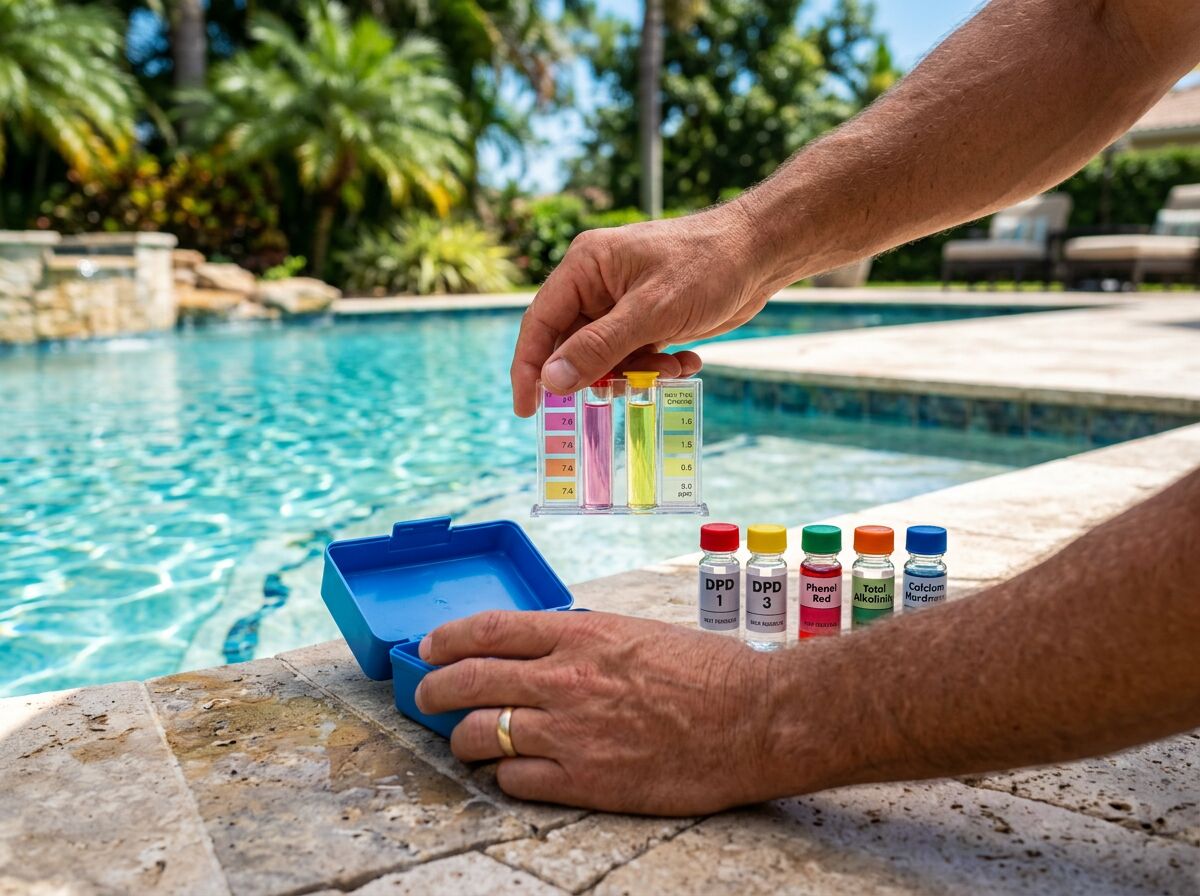
What we test
These are general target ranges for residential pools. Exact targets depend on your pool’s surface, sanitizer system and equipment, and we adjust for each pool.
7.4 – 7.6
Controls how comfortable the water feels and how well chlorine works. Low pH etches plaster and corrodes metal. High pH causes cloudy water and scale.
1 – 3 ppm
Your sanitizer. It kills bacteria and algae. Florida sun burns it off quickly, so it’s checked every week.
80 – 120 ppm
Acts as a buffer that keeps pH from swinging after rain, heavy swim days or added chemicals.
30 – 50 ppm
Shields chlorine from UV rays. Too little and chlorine disappears in hours. Too much and chlorine can’t do its job.
200 – 400 ppm
Too low and water pulls calcium from plaster and grout. Too high and you get scale on tile and equipment.
Per manufacturer
Salt systems make their own chlorine but still need balanced pH, alkalinity and stabilizer to protect the cell.
Florida pool protection
Our climate gives us year-round swimming, and it means year-round care. Here’s what makes the biggest difference.
Heavy afternoon rain dilutes chlorine and lowers pH and alkalinity, while washing in debris and nutrients. That’s a perfect recipe for algae. Run your pump and skim out debris. Weekly testing catches what storms leave behind.
Water above 85°F uses up chlorine fast and helps algae grow. Run your pump long enough to turn over the water daily, and don’t let the water level drop below the skimmer.
Aim for the middle of the skimmer opening. Too low and the pump can run dry. Too high and the skimmer can’t pull in floating debris.
Balanced water is the cheapest way to protect plaster, pebble finishes, tile grout and pool equipment. Most staining, etching and scale starts with water that has been out of balance for weeks.
Never mix pool chemicals together, and always add chemicals to water, never water to chemicals. Store them in a cool, dry place away from kids and pets.
Cloudy water, slippery walls, green tints in corners or a strong “chlorine” smell (which actually means chloramines) are all signs your water needs attention.
Why weekly matters
Pool chemistry drifts every day. Weekly testing and balancing keeps it in range before it becomes a green pool, a stained finish or a worn-out pump. That’s what a weekly service plan is built for.
Get a free, no-obligation quote for weekly pool service in Naples, Marco Island and nearby communities.